Thomas G. Gardiner

Leadership
- Leading Lawyer, 2016-present
- Illinois Super Lawyer, 2007-present
- Niagara Foundation (traveled with a delegation of judges and lawyers to Turkey, promoting US/Turkish relations)
- President (2001), Vice President, Secretary, Treasurer and Director, South Suburban Bar Association
- Trustee, Village of Glenwood (Chairman of Police, Judicial and Building Committees), 1985-1994
- Trustee, Prairie State College, 1981-1993 (Chairman, 1984-1989)
- Badger High School District board member, 2006-07
- Local Plan Commission, 2008-present
- General Counsel, Southland Chamber of Commerce, 2014-present
- Other Positions: Board member for two non-profits; on church council at two churches; advisory boards of other organizations
Educator
- Adjunct Professor, Northwestern University School of Law
- Certified Trial Instructor, National Institute of Trial Advocacy
- Former Supervisor of Trial Lawyers, Cook County State’s Attorney’s Office
- Guest Instructor at various Chicago-area law schools.
- Judge, John Marshall Law School Thirtieth Annual International Moot Court Competition in Information Technology & Privacy Law
Published Author & Speaker
- Articles published in Illinois Municipal League Journal, Illinois Tax Financing publication, Chicago Tribune, Screen Magazine, American Bar Association Journal, Association of Community College Trustee Quarterly, and Southland Chamber of Commerce Magazine; Substitution of Judges in DuPage County Bar Journal
- Editor-in-Chief, Journal of Criminal Law & Criminology
- Speaking Engagements: Expert Disclosures in Personal Injury Litigation before the South Suburban Bar Association; “Employment Issues” before the Will County Bar Association; The Implications of the Nichols Case Before the Illinois Waste Water Treatment Association; speaking on various subjects before the Illinois Municipal League; Open Meetings Act before the South Suburban Mayors and Managers Association, “When It Rains, It Pours” held by Horton Insurance Group
- “Consent to Search in Response to Police Threat to Seek or Obtain Search Warrant: Some Alternatives,” Journal of Criminal Law & Criminology
After graduating from the Northwestern University School of Law, Tom Gardiner worked at a series of important positions, including clerking for Judge John F. Grady, working at large law firms, and serving as a trial supervisor at the Cook County State’s Attorney Office. He launched GKWW with the late Jim Koch in 1992.
He has successfully represented individuals, municipalities and business entities in an exceptionally encyclopedic variety of contexts, all the way up to the United States Supreme Court, where he collaborated with his GKWW partners on the case of Illinois v. Wardlow (2000). He recently won a landmark insurance coverage case on behalf of a general contractor before the Wisconsin Supreme Court.
Tom’s many years of litigation experience and ability to connect with judges and jurors has allowed him to achieve significant results for those who have experienced catastrophic injuries. Teaming up with John Wrona and other members of the GKWW team has led to meaningful recoveries for the families of those who have died or for individuals who have survived the accident.
Tom’s myriad other accomplishments have not gone unrecognized. Since 2007, Tom’s peers have selected him as an Illinois Super Lawyer annually, placing him as one of the top lawyers in his practice areas. He has also been chosen as a Leading Lawyer by the Chicago Daily Law Bulletin and his peers. Tom holds membership in the Million Dollar Advocates Forum – a distinction limited to trial lawyers who have demonstrated exceptional skill, experience, and excellence in advocacy by achieving a trial verdict, award or settlement in the amount of $1 million or more.
Tom’s work on behalf of injured individuals covers matters from medical malpractice, personal injury, products liability, wrongful death litigation and nursing home litigation to civil rights actions. He also maintains an active practice in commercial litigation and municipal litigation.
Over the course of his sterling career, Tom’s efforts have, in a South Carolina case he led, resulted in the awarding of many millions of dollars to his clients: for instance, John Wrona and Tom achieved a substantial recovery for a truck driver who had to drive off the interstate to avoid colliding with an overturned 18-wheeler.
Tom’s litigation experience has caused clients to seek his services in areas beyond catastrophic injury cases, including circumstances of wrongful conviction. Tom was part of a trial team that won a $21 million wrongful conviction verdict for Juan Johnson – at the time, one of the largest civil rights verdicts ever awarded by a jury.
Private entities seek Tom’s counsel in matters involving both transaction and litigation. He serves as outside general counsel to more than 100 companies. From the formation of new companies to navigation of the thorny corporate issues that mark a successful company’s day-to-day, Tom’s advice keeps many of Chicago’s most successful businesses on a steady course.
Tom’s expertise covers contracts, acquisitions, sales of shares, real estate, business asset purchases and sales and succession, as well as general contract and employment matters. On the litigation side, Tom’s representation has supported his corporate clients in matters ranging from contract disputes to complex commercial, employment, restrictive covenant and intellectual property cases. He has represented both sides of disputes involving municipalities.
Tom feels strongly about his role as an educator outside the halls of GKWW–both of law’s next generation and of the public at large. He has served for many years as an Adjunct Professor of Trial Advocacy at his alma mater, the Northwestern University Pritzker School of Law, and welcomes the opportunity to teach on a guest basis at other institutions of higher learning. Tom’s written work has been extensively published in industry journals, magazines, and newspapers. He has also authored a book applying business principles to post-nuptial agreements.
Tom Gardiner is one of only five United States lawyers chosen for membership in the International Practice Group (IPG). This organization is composed of lawyers and accountants around the globe who meet twice per year to apprise each other of developments in law and finance throughout the world, Tom is a frequent presenter at the semi-annual conferences.
In 2022, he presented on changes to the U.S. Trademark Act coming in January 2023–including to expungement, reexamination, and letters of protest–which will make the process faster and much less expensive.
Tom was featured in the 2019 Consumer Edition of Leading Lawyers Magazine.
He is a longtime member of and now serves as vice president of the Geneva Lake Association. He also serves on his local plan commission and as the treasurer of a local bar association. He serves as a special commissioner for a local court.
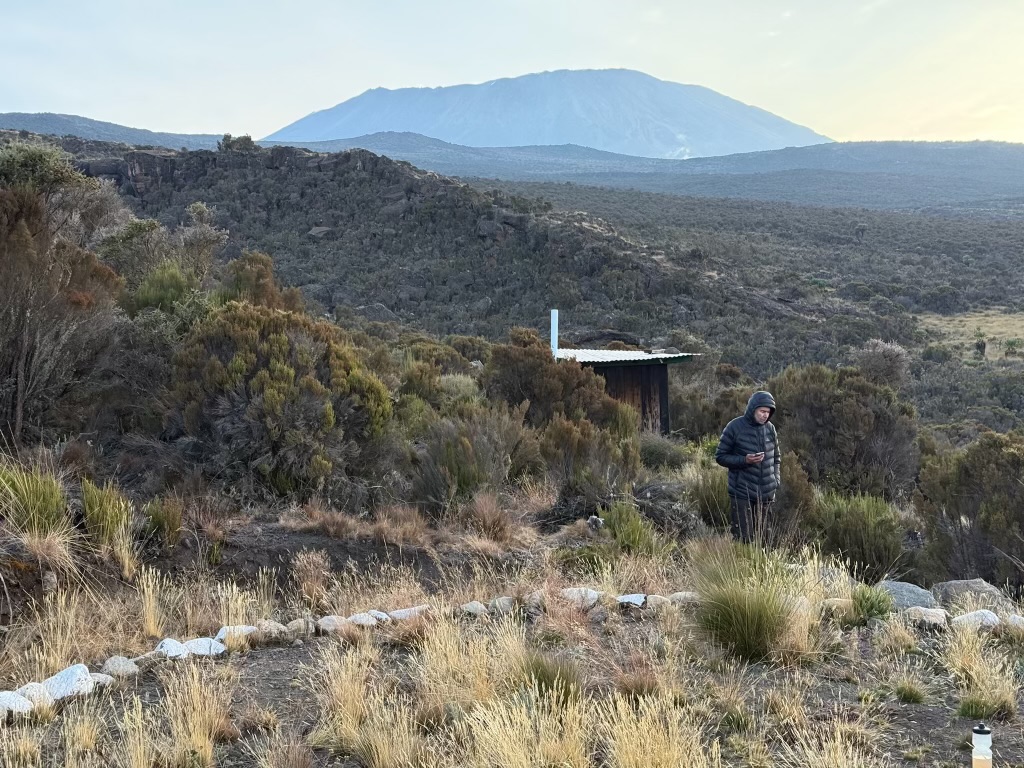
He formerly served as president of a bar association in southern Cook County. He is general counsel to the Southland Chamber of Commerce. He has previously served as the chairman of an elected community college board of trustees and as a village trustee in Glenwood, Illinois. Apart from the law, Tom is an avid basketball player and water skier. He recently summited Mt. Kilimanjaro in Tanzania, the highest freestanding mountain in the world.
Representative Matters
A selection of reported cases Tom has handled. See more of the firm’s work on GKWW Greatest Hits.
Landmark case · U.S. Supreme Court
Illinois v. Wardlow, 528 U.S. 119 (2000)
One of the best-known Fourth Amendment decisions in the country. GKWW represented respondent Sam Wardlow before the U.S. Supreme Court: Tom was on the brief with his partners James B. Koch, who argued the case on November 2, 1999, and Lynn N. Weisberg.
The question was whether a person’s unprovoked flight from police in a high-crime area gives officers reasonable suspicion for an investigatory stop under Terry v. Ohio. In a 5–4 decision, the Court held that it can. Wardlow set the national standard on flight and reasonable suspicion, and it remains widely cited by courts and taught in law schools across the country.
Read the full story of the case →
Read the opinion: Justia | Oyez (with oral argument audio) | Cornell LII
PFAS/AFFF class action (MDL 2873) (municipal water systems, incl. Village of Lakewood, IL)
2025 · U.S. District Court, D. South Carolina (MDL No. 2:18-mn-2873-RMG) · MDL 2873
Role: Co-counsel for Illinois municipalities, with Stag Liuzza
Result: Part of the national 3M and DuPont water-system settlements; Illinois municipalities joining Phase 2.
Read more: shawlocal.com | pfaswatersettlement.com
Protect Our Parks, Inc. v. Buttigieg
2024 · U.S. Court of Appeals, Seventh Circuit · 97 F.4th 1077
Role: Counsel for plaintiffs-appellants (with Catherine M. Keenan, GKWW)
Seventh Circuit appeal challenging the location of the Obama Presidential Center in Chicago’s Jackson Park. Thomas G. Gardiner represented the plaintiffs-appellants in what the court described as the latest challenge to the planned center.
Read more: caselaw.findlaw.com
5 Walworth, LLC v. Engerman Contracting, Inc.
2023 · Wisconsin Supreme Court · 2023 WI 51 (Nos. 2019AP1085, 2019AP1086); review of 2021 WI App 51
Role: Counsel for defendant-appellant Engerman Contracting (briefs with Richard C. Gleason at the Court of Appeals)
GKWW handled the most significant insurance coverage case in the last 15 years in Wisconsin, 5 Walworth, LLC v. Engerman Contracting, Inc., 2023 WI 51. In that case, an insurance carrier for a prominent lakefront home builder denied coverage for a claim related to the construction of a home. The Wisconsin Supreme Court held that the insurer had to cover the general contractor. This decision helps all general contractors in the State of Wisconsin.
Result: The Wisconsin Supreme Court affirmed (2023 WI 51): damage caused by a subcontractor’s work can constitute a covered “occurrence” under a CGL policy.
Read more: law.justia.com | wicourts.gov
Village of East Dundee v. Village of Carpentersville
2016 · Illinois Appellate Court, Second District · 2016 IL App (2d) 151084
Role: Counsel for plaintiff (with Richard C. Gleason, Michelle LaGrotta)
When Wal-Mart announced plans to close its East Dundee store and open a Supercenter in neighboring Carpentersville using $4.3 million in TIF funds, GKWW sued on behalf of East Dundee challenging Carpentersville’s approval under the TIF Act’s 10-mile relocation provision. The trial court dismissed for lack of standing, but the appellate court vacated that dismissal, finding East Dundee had been improperly denied its right to a substitution of judge. The case was remanded for further proceedings before a different judge.
Devyn Corporation v. City of Bloomington, Illinois
2015 · Illinois Appellate Court, Fourth District · 2015 IL App (4th) 140819
Role: Counsel for defendant (with Richard C. Gleason, Michelle M. LaGrotta)
A property owner within a tax-increment-financing district challenged the City of Bloomington’s actions in levying, collecting, and spending incremental tax revenue after the district’s estimated completion date of December 21, 2009. GKWW successfully argued that the estimated date of completion was just that — an estimate — and not an absolute termination date, and that the city’s actions were lawful under the Tax Increment Allocation Redevelopment Act. The appellate court affirmed summary judgment for the city on all counts and upheld the denial of the plaintiff’s repeated attempts to amend its complaint.
Typenex Co-Investment, LLC v. Solar Wind Energy Tower, Inc.
2015 · U.S. District Court, N.D. Illinois · 123 F. Supp. 3d 1017
Role: Counsel for defendant/counter-plaintiff (with Barry C. Owen, Micah Jon Hughes)
GKWW represented Solar Wind Energy Tower, a publicly traded alternative energy company, in a dispute with investor Typenex over a $500,000 convertible note. After Typenex failed to follow the promised payment schedule and sought to convert the debt into equity, GKWW filed counterclaims alleging Typenex committed securities fraud and common law fraud by quietly removing the agreed-upon payment terms from the final documents. The court allowed the fraud counterclaims to proceed, finding a strong inference of scienter and that SWET’s reliance on Typenex’s assurances was not unreasonable.
Nichols v. City of Chicago Heights
2015 · Illinois Appellate Court, First District · 2015 IL App (1st) 122994
Role: Counsel for defendant (with Barry C. Owen, Kyle P. Carson)
After a heavy rainstorm in April 2006 caused raw sewage to flood the basements of approximately 5% of Chicago Heights residents, a group of homeowners sued the city for negligence. GKWW successfully argued that the city was entitled to discretionary immunity under the Tort Immunity Act, as the city council’s decisions about how to allocate limited funds among competing sewer rehabilitation priorities were discretionary policy judgments — not ministerial duties performed in a prescribed manner. The appellate court affirmed summary judgment for the city, also rejecting the plaintiffs’ res ipsa loquitur claim because the city did not have exclusive control over the sewer system.
Bank of Commerce v. Fyre Lake Ventures, LLC
2015 · U.S. District Court, C.D. Illinois · 84 F. Supp. 3d 807
Role: Counsel for defendant Kenneth Hoffman
Foreclosure action arising from a defaulted $9 million loan for a development project. Thomas G. Gardiner represented guarantor Kenneth Hoffman, who argued he had been released from liability through a prior settlement agreement with the FDIC. The court found the release language ambiguous and denied Hoffman’s motion for summary judgment, preserving the issue for trial.
In re Estate of Bennoon
2014 · Illinois Appellate Court, First District · 2014 IL App (1st) 122224
Role: Counsel for petitioner-appellant (with Michelle M. LaGrotta)
GKWW represented a Ukrainian woman claiming to be the great-niece and paternal heir of a decedent who died in Cook County with no known paternal heirs. Her claim rested on apostille-certified birth and marriage certificates from Ukrainian archives. The public administrator countered with a genealogist and a Ukrainian National Archives official who testified that the archival records had been falsified — pages glued into registry books with mismatched ink, altered numbering, and incorrect source codes. The appellate court affirmed the denial of the heirship petition, finding no error in qualifying the genealogy expert, refusing comity to an ex parte Ukrainian court order, or crediting the respondent’s witnesses.
In re Hudson
2013 · U.S. Court of Appeals, Seventh Circuit · 710 F.3d 716
Role: Counsel for petitioner Daniel Hudson
GKWW sought a writ of mandamus on behalf of Daniel Hudson, a former federal prisoner who sued under the Federal Tort Claims Act after medical personnel at a Kansas prison allegedly failed to diagnose a blood clot in his leg. After the district court transferred the case from Illinois to Kansas, Hudson petitioned the Seventh Circuit to reverse the transfer, arguing that he, his treating physicians, and family witnesses were all in Illinois. Judge Posner acknowledged the case was close but denied the petition, finding that more than two-thirds of potential witnesses were in or near Kansas and that the petitioner had not met the demanding standard required for mandamus relief.
State ex rel. Mirbeau of Geneva Lake, LLC v. City of Lake Geneva
2010 · U.S. District Court, E.D. Wisconsin · 746 F. Supp. 2d 1000
Role: Counsel for defendants James Connors and Richard Malmin (with James B. Koch, John R. Wrona and others)
Represented defendants James Connors and Richard Malmin in a federal civil rights and tortious interference dispute. Mirbeau alleged that the defendants conspired with city officials to derail its zoning amendment application and interfere with its contract to purchase 54.5 acres for a mixed-use development in Lake Geneva. The court granted defendants’ motions to dismiss, finding that Mirbeau failed to allege the defendants shared a goal of violating the plaintiff’s constitutional rights and that the tortious interference claim was time-barred under Wisconsin’s two-year statute of limitations.
Schroeder v. Winyard
2007 · Illinois Appellate Court, Second District
Role: Counsel for defendant (summary judgment affirmed)
Alienation of affections suit in which the plaintiff sued the defendant for destroying her marriage through a year-long affair with her husband. The appellate court affirmed summary judgment for the defendant, holding that her liability had been discharged in a prior Chapter 7 bankruptcy because the plaintiff failed to show the defendant subjectively intended to cause injury.
Acosta v. Scott Labor LLC
2005 · U.S. District Court, N.D. Illinois · 377 F. Supp. 2d 647
Role: Counsel for defendant Form House, Inc.
Hispanic workers filed a class action alleging wage theft and overtime violations against a staffing company and its principals. One of the individual defendants filed a counterclaim against lead plaintiff Acosta for intrusion upon seclusion, alleging Acosta secretly videotaped the office and the footage aired on the local news. The court dismissed the counterclaim, holding that the employer failed to allege any private facts or a reasonable expectation of privacy in a shared office area, and that workplace videotaping to document misconduct does not constitute an invasion of privacy as a matter of law.
Smith v. Elzey (In re Smith)
2002 · U.S. Bankruptcy Court, N.D. Illinois
Role: Counsel for defendant Kaplan and Layne Financial Services (with John R. Wrona)
Represented defendant Kaplan and Layne Financial Services in a bankruptcy adversary proceeding. The debtor alleged she was deceived into signing over her home through a fraudulent mortgage scheme involving excessive loan fees and a deed in lieu of foreclosure obtained under false pretenses. The court denied the plaintiff’s motion for default judgment against co-defendant Century Mortgage, finding unresolved issues including potential res judicata from the prior dismissal of GKWW’s client and possible federal preemption of the state law claims.
People v. Asselborn
1996 · Illinois Appellate Court, First District · 278 Ill. App. 3d 960, 664 N.E.2d 110
Role: Counsel for defendant-appellant (predecessor firm Gardiner, Koch & Hines)
Following a bench trial conviction for arson and a sentence of 30 months’ probation, GKWW’s predecessor firm appealed on the ground that the defendant never signed a written jury waiver as required by the Code of Criminal Procedure — an issue on which Illinois appellate districts were split. The defense argued that the absence of a written waiver entitled the defendant to automatic reversal, citing decisions from the Second and Third Districts. The First District affirmed the conviction, siding with the Fourth District’s view that the failure to obtain a written waiver was harmless error where the defendant had knowingly and voluntarily waived his right to a jury trial in open court through counsel, without objection, reasoning that the written-waiver requirement is a statutory right rather than a constitutional one.
Genin, Trudeau & Co. v. Integra Development International
1994 · U.S. District Court, N.D. Illinois
Role: Counsel for plaintiff (with John L. Hines Jr.)
Represented the plaintiff in a licensing dispute over water-filled vinyl placemats called “Splashies.” The plaintiff alleged the defendant broke an oral exclusive licensing agreement by secretly negotiating and signing a written license with a competitor. The court dismissed the trademark infringement and breach of contract claims but allowed the promissory estoppel claim to proceed, finding the defendant’s conduct fell within the equitable estoppel standard under Illinois law.
CFTC v. Thomas W. Collins
1993 · U.S. Court of Appeals, Seventh Circuit
Role: Counsel for respondents (with John L. Hines Jr., James B. Koch)
Represented respondents in a federal enforcement action where the Commodity Futures Trading Commission subpoenaed copies of their personal income tax returns during an investigation into suspected off-exchange commodities trading. The Seventh Circuit reversed the district court’s order enforcing the subpoenas, holding it was an abuse of discretion to compel production without any showing that the Commission actually needed the tax returns for its investigation.
Wieboldt Stores, Inc. v. Schottenstein
1991 · U.S. District Court, N.D. Illinois
Role: Counsel for defendants and third-party defendants
Represented defendants State Street Venture, One North State Street Limited Partnership, BA Mortgage and International Realty Corp., and third-party defendants Boulevard Bank and Bennett & Kahnweiler in complex litigation arising from the leveraged buyout of Wieboldt Stores. The bankruptcy trustee alleged the LBO constituted a fraudulent conveyance of the retailer’s assets. The court denied all pending motions for summary judgment and dismissal, finding genuine issues of material fact on claims including legal malpractice, fraudulent conveyance, and agency liability.
Johnson v. Martin (two separate cases)
1991 · U.S. Court of Appeals, Seventh Circuit
Role: Counsel for defendants incl. Chicago Police Superintendent and City of Chicago
Represented the defendants, including the Chicago Police Superintendent and the City of Chicago, in a civil rights case brought by a probationary officer who was discharged after testing positive for morphine and codeine during random drug screening. The officer claimed his liberty interest in reputation was violated. The Seventh Circuit affirmed dismissal, holding that stigmatizing information retained in a personnel file but never publicly disclosed does not constitute the “public disclosure” required to support a constitutional defamation claim.
Johnson v. Guevara
2009 · U.S. District Court, N.D. Illinois · No. 1:05-cv-01042
Role: Member of the trial team for plaintiff Juan Johnson (with Loevy & Loevy)
Civil rights case brought by Juan Johnson, who served more than eleven years in prison for a 1989 murder before being acquitted at retrial. Johnson’s suit alleged that a Chicago police detective had framed him. In June 2009, a federal jury found in Johnson’s favor on claims of due process violations, malicious prosecution and intentional infliction of emotional distress, and awarded him $21 million.
Podcasts, Radio & Talks
- The Litigator’s Edge: Think Long Term, Not Short Term (podcast, 2025)
- Lawyer Mastermind Podcast, Ep. 5: Managing a Firm with Remote Employees (Juris Digital, 2020)
- PFAS settlement presentation to the Batavia, IL Committee of the Whole (2025)
- “Real Life Law” on 96.1 WLKG, Lake Geneva
- A Quarter Century of GKWW: Tom Gardiner Reflects on 25 Years